
In every generation, dramatic transitions feel unique—unprecedented in scale, intensity, and personal impact. Yet each era of change hums with familiar echoes of uncertainty, adaptation, and resilience.
If you sense the ground shifting beneath you, or if organizational upheaval and rapid, continuous change leave you questioning your place, you’re not alone—and you’re not untethered. What feels chaotic from within finds clarity in the broader sweep of history. This article provides a calm, grounded perspective: an invitation to recognize familiar patterns, reclaim agency, and locate your self—steadily—amid transformation.
Story at the Threshold: How Every Era of Change Feels from the Inside
“The present always feels unprecedented until we remember the patterns of the past.”

The feeling of standing at the crossroads—on the threshold of a new age—is deeply human. From the Industrial Revolution through today’s age of generative AI, each significant era of change has caught individuals and organizations off-guard, urging adaptation in ways both expected and surprising. The anxiety of not knowing what’s next, the volatility in public management, and the hum of organizational upheaval shape our work environments and our individual sense of self.
Yet if we step back, a pattern emerges: what seems like uncharted territory is rarely new. American businesses, governments, and communities have navigated these transitions before. The essential challenge is not to react with fear, but to notice how enduring this experience is—the feeling of transformation, as well as the opportunity for grounded agency. We are living history, just as those before us. Recognizing this is the first step toward perspective and balance amidst continuous change.
What You’ll Learn: Gaining Perspective on an Era of Change
-
Understand historical patterns in eras of change
-
Recognize the pressure and risks of continual transformation
-
Reflect on how organizational upheaval and public management adapt to shifting times
-
Find agency and belonging without losing personal perspective
Context: Seeing Our Moment in the Continuum of an Era of Change
The context of the present moment is more than a headline; it’s the next stroke in a painting centuries in the making. Each era—whether marked by new technologies, social flux, or shifting business models—bears a striking resemblance to those before. Consider how public management and organizational upheaval ripple through society and the work environment, guiding (and sometimes unsettling) business leaders across regions of the world. Orientation begins by seeing ourselves not as outliers, but as participants in a continuous, cyclical process.
Every major transformation—from shifts in supply chain to the rise of generative AI—requires organizations to adapt their fixed costs, production of goods and services, and even their learning culture. Rather than being signs of instability alone, these experiences suggest a lineage, a shared tradition of navigating continuous change. This perspective helps restore calm, grounding—reminding us that from raw material to business model, innovation is not an aberration, but the norm.
For a deeper look at how organizations can foster resilience and adaptability during times of upheaval, explore the practical frameworks and insights available at What’s Next for Humanity. Their resources offer actionable strategies for navigating transformation in both public and private sectors.
Historical Patterns: From Organizational Upheaval to Continuous Change
| Era | Key Characteristics | Organizational Upheaval | Public Management Response |
|---|---|---|---|
| Industrial Revolution | Mass migration, new technologies | Labor unrest, new hierarchies | Emerging bureaucracies |
| Information Age | Rapid communication, global flows | Tech-sector disruption | Flexible, networked systems |
| Current Era of Change | Constant digital transformation | Hybrid work, systemic rethinking | Adaptive leadership |
The table above highlights how, in every era of change, transformation extended from the shop floor to the executive suite, pressing entire corporations to reevaluate their approach to goods and services, supply chains, and fundamental business models. In each epoch, public management had to adjust—sometimes with bureaucratic rigor, other times through adaptive, distributed leadership. Generative AI and digital innovation are simply the latest tools accelerating change; the sensation of rapid change itself is timeless. The resilience gained from learning from past transitions is today’s competitive advantage.
Pattern: Why Every Era of Change Feels Disorienting
The architecture of uncertainty repeats throughout history. Organizational upheaval unsettles routines, public management struggles to hold balance, and continuous change tests mental health and collective identity. The common thread is not confusion, but the experience of confusion—the sense that no one has the map, and that each fast decision must be made in uncharted territory.
These patterns are not a mark of failure. Rather, they highlight the human inclination to seek order amid disorder, especially in the work environment where influential leaders must steward both people and systems through ambiguous transitions. Whether adjusting raw material costs or evolving management styles, every moment of instability contains the raw elements of future stability. Recognizing the rhythm—change, response, learning, recalibration—enables both business leaders and everyday professionals to stay grounded.
Recognition: Common Human Response to Continuous Change
-
Sense of uncertainty and volatility
-
Identity shifts under public management
-
Desire for clarity in organizational upheaval

Whether navigating digital disruption or managing fixed costs within a shifting supply chain, organizations and individuals alike experience periods when certainty seems out of reach. What feels personal is, in fact, collective—a pattern embedded in the DNA of work environments across eras. The constructive challenge is to honor the discomfort, while also locating the clarity and belonging that historical perspective brings. Products and practices change, but the foundation of resilience and adaptive learning remains constant.
Pressure: The Human Cost of Navigating Continuous Change
Continuous change delivers not only a creative spark but also profound human pressure. Staff are asked to adapt to new technologies and management styles seemingly overnight; business leaders must model stability even as the ground shifts. The demands on mental health rise, while the boundaries of personal and professional identity blur. This pressure—often unseen—represents the cost of perpetual transformation and highlights the need for rest, reflection, and grounded decision-making amid organizational upheaval.
For some, risks include loss of job security, erosion of belonging, and the temptation to react rather than engage thoughtfully. Yet for organizations, these pressures are not new. They are intrinsic to every era of change, reminding us that the only constant is the need to recenter and adapt. Public management, likewise, faces the double bind of needing to innovate while providing continuity. Recognizing this shared burden invites compassion for self and others, and a refusal to collapse into anxiety or urgency.
Risk: The Consequences of Perpetual Reaction in Eras of Change
“Periods of organizational upheaval always demand a recalibration of self.”
Being in a constant state of reaction can undermine both personal well-being and organizational health. Fast decisions made out of fear or uncertainty, without attention to learning culture or steady strategy, can create cycles of burnout, disengaged Michelle figures, or even a collapse of competitive advantage. Within manufacturing businesses and corporations, generative AI and advanced lean practices can cover for but not cure the cost of unexamined overwhelm. The risk is losing not just efficiency, but identity—the essence of what sets people and organizations apart.
Instead, periods of organizational upheaval are best approached as opportunities for recalibration: taking stock of what matters, recognizing the fixed costs that can’t be negotiated, and restoring clarity through measured reflection. This is not an argument for inaction, but a call to thoughtful orientation. Each person and business, in every region of the world, carries the power to respond skillfully, preserving agency rather than dissolving into conformity.
Integration: Belonging and Ownership During Organizational Upheaval
-
Holding complexity without losing self
-
Navigating public management without collapsing into sides
-
Restoring personal agency within the era of change

The paradox of continuous change is that it can threaten belonging, even as it begs for greater collaboration. Highly engaged teams, fostered by steady public management, offer both support and a framework for retaining agency. Lean practices and learning cultures serve not only the goals of efficiency, but the deeper need for security as identity, business models, and products and practices evolve.
Navigating organizational upheaval with calm presence means holding the inherent complexity without losing your anchor. Allowing for integration—rather than collapse into rigid categories or sides—creates space for creative solutions and connection. In the work environment, this translates to cultures where individuals feel both seen and empowered, drawing from the inherited wisdom of previous generations who not only survived but also grew through similar eras of change.
Discernment: Agency Versus Conformity in Each Era of Change
Every era of change invites a choice: do we surrender to the tumult to make quick decisions that may not serve in the long run, or do we navigate complexity with self-possession, contributing consciously to the direction our organizations and cultures take? The challenge is not to resist change, but to discern how to move through it without sacrificing personal integrity or individuality
Within regions of the world experiencing upheaval, the tension between conformity and agency plays out in the design of products, processes, and even supply chains. By aligning management styles with thoughtful learning and collaboration, both entire corporations and individuals gain a competitive advantage—not just of productivity, but of identity and purpose.
Responsibility: Choosing Thoughtful Engagement Over Reaction

The responsibility of presence in an era of change cannot be overstated. Much like influential leaders, individuals have the capacity—and the freedom—to engage reflectively, not reflexively. Thoughtful engagement may mean reevaluating the goods and services we provide, the learning cultures we foster, or the ways we communicate and collaborate in the workplace. It may also mean gently declining to collapse into division or reaction.
Agency is not isolation. It’s the quiet strength to choose how—and whether—to participate in the prevailing winds of transformation. In workplaces, within families, and as part of society, this discernment is the true competitive advantage of our time.
People Also Ask: Insights into the Era of Change
What are the 5 C’s of change?
Answer: The 5 C’s of change—Clarity, Communication, Collaboration, Commitment, and Continuity—are used within public management and organizational upheaval to support successful transitions through any era of change.
What is the current era?
Answer: The current era is often defined by continuous change—technological acceleration, social flux, and widespread organizational upheaval—redefining public management and identity.
What are the 4 changes of change?
Answer: The 4 changes of change can refer to shifts instructure, process, people, and technology, each playing a part in the larger era of change impacting both public management and organizational systems.
When was the era of social change?
Answer: While social change is constant, notable eras—such as the 1960s—are synonymous with rapid transformation, public management innovation, and deep organizational upheaval.
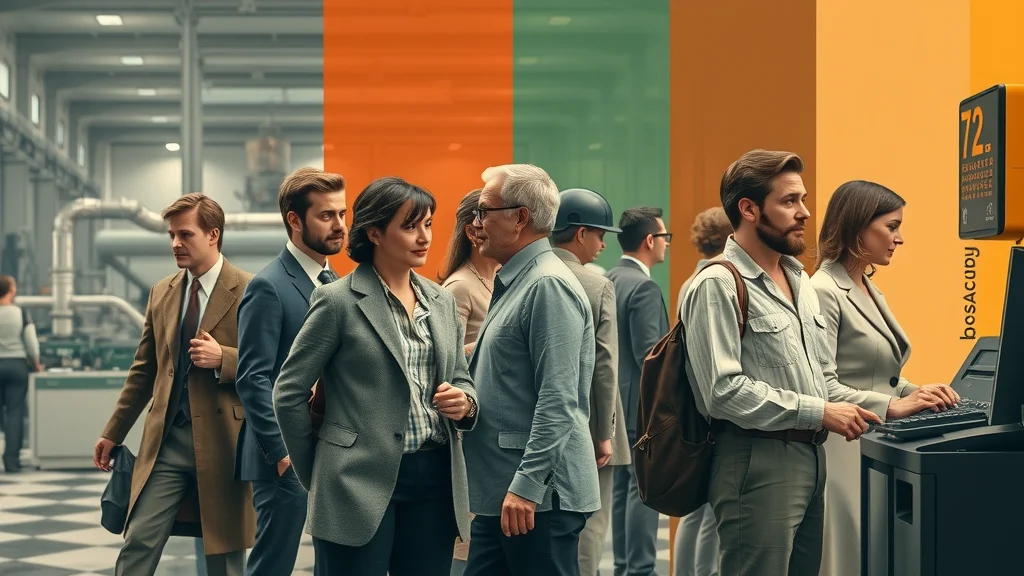
A visual timeline illustrates how key eras—Industrial Revolution, Information Age, and our own—blend, showing workplaces, cityscapes, and diverse teams adapting together. See how the thread of adaptation and agency unites past, present, and future eras of change.
FAQs: Integrating Learning About Eras of Change
-
How can I remain centered during organizational upheaval?
Remaining centered is about cultivating perspective: tracing the patterns of previous eras, focusing on self-care, grounding in your core values, and engaging with others through collaboration and open dialogue in the workplace. The goal isn’t to eliminate uncertainty—it’s to restore your own agency within it. -
What is the role of public management in continuous change?
Public management anchors institutions by balancing innovation with stability. Its job in a continuously changing environment is not only to steer policies but also to foster adaptive cultures, ensuring safety nets and flexibility for people navigating complex organizational environments. -
How do personal identity and belonging shift in an era of change?
Personal identity in times of change is shaped by context, roles, and one’s relationship to collective experiences. Belonging is not lost; it evolves, often deepening as individuals encounter new challenges and reorient their sense of self amid collective transformation.
Key Takeaways: Navigating Your Own Era of Change
-
Every era of change has echoed patterns of upheaval and adaptation.
-
Understanding historical context reduces anxiety and restores agency.
-
Belonging and ownership are possible even in continuous change.

Reflection: Staying Intact While Living History
“You are living inside history — and you don’t have to lose yourself to it.”
For Further Orientation: What’s Next for Humanity
Visit: https://whatsnextforhumanity.com
If this exploration of change has sparked your curiosity, consider broadening your perspective by delving into the wider questions shaping our collective future. What’s Next for Humanity offers a panoramic view of emerging trends, societal shifts, and the evolving role of technology in our lives. By engaging with their thought leadership, you can gain advanced insight into not just surviving, but thriving through transformation. Let your journey toward clarity and agency continue as you discover what lies ahead for organizations, communities, and humanity.